HVAC Repair Questions, Answered Simply
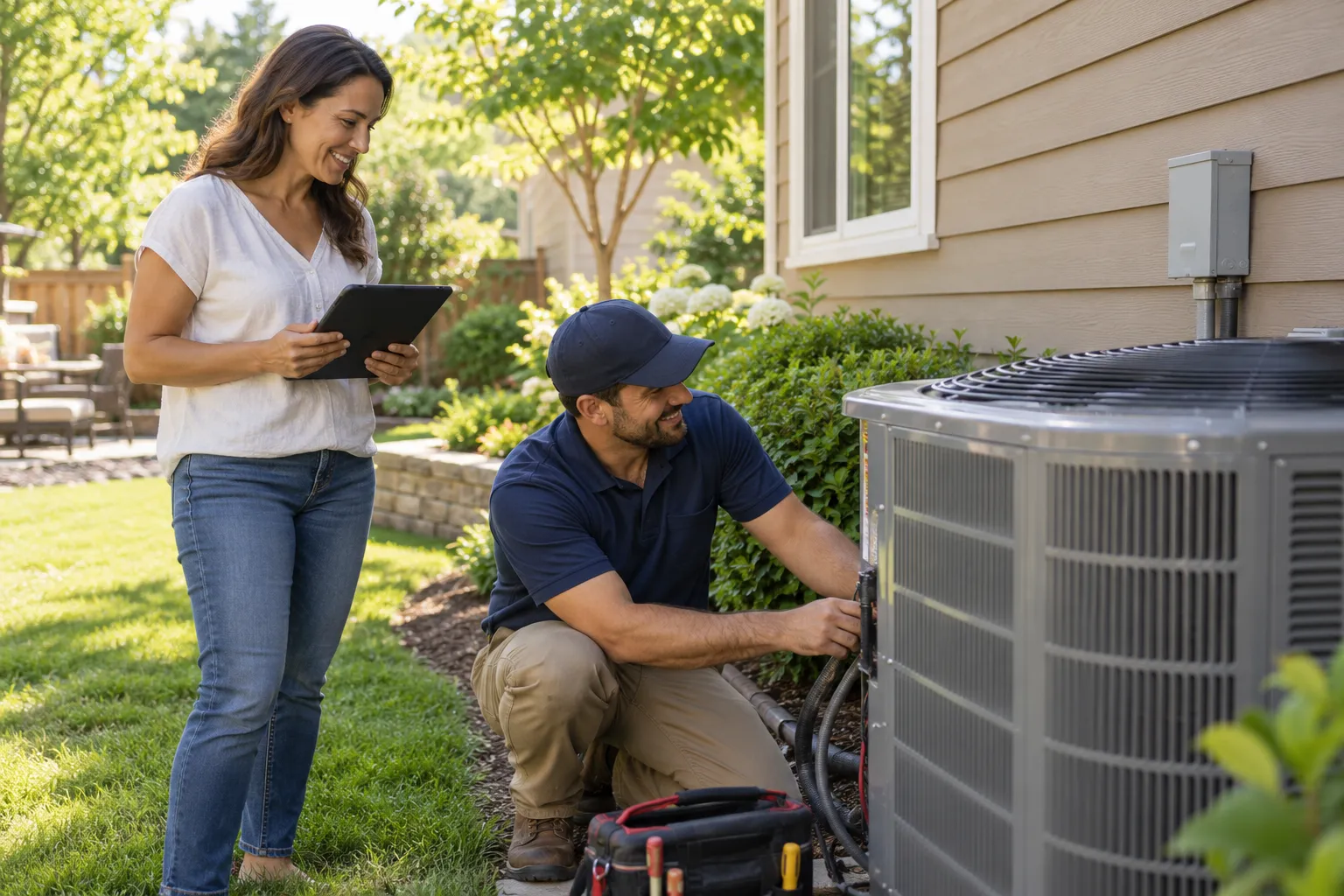
Answers to common questions
Is it safe to keep running my furnace if it smells odd or makes noise?
Not always. A burning smell, a rotten-egg odor, or loud banging are warning signs. Do turn the system off at the thermostat. Do leave the house and contact your gas utility if you smell gas. Do not relight a pilot or open the burner area yourself. If a carbon monoxide alarm sounds, get everyone outside first. Then ask a local provider to inspect the system.
What can I check myself before I request AC repair?
A few safe checks are fine. Make sure the thermostat is set to cool and has fresh batteries. Check that the breaker has not tripped. Look at the air filter and replace it if it is clogged. Do not open the outdoor unit, touch wiring, or handle refrigerant. If those checks do not help, stop there and ask a provider.
How much does AC repair or furnace repair usually cost?
Costs vary by job, system age, and parts. In the U.S., small repairs like a capacitor or igniter often run a few hundred dollars. Bigger fixes, like a blower motor or compressor, can run into the thousands. Treat these as typical ranges only. Always ask for a written quote that lists parts, labor, and any extra fees before you agree to work.
How do I know if I should repair or replace my system?
Look at age, repair history, and energy bills. Many systems last about 10 to 15 years for AC and 15 to 20 for furnaces. If the repair costs a large share of a new unit, replacement may make more sense. Ask each provider to explain both options in writing. Compare before you commit, and take your time deciding.
How do I choose a provider I can trust?
Ask for the provider's license and insurance details, and check them yourself with your state or local office. Request a written quote with the full scope of work. Do not feel pressed to sign on the spot. Compare at least two estimates. Providers in our network are independent, so ask them directly about warranties and timing.
Will my homeowners insurance pay for a broken AC or furnace?
It depends on your policy and the cause. Some policies may cover sudden damage, such as a lightning strike or hail hitting an outdoor unit. Wear and tear is usually not covered. Check your policy or ask your insurer. Providers can often help document damage with photos and notes for a claim.
Can I get emergency AC repair during a heat wave?
Many providers can respond quickly, but availability varies by day and by provider. Request a callback to check provider availability in your area. While you wait, close blinds, use fans, and drink water. Move older family members and pets to the coolest room. Do not run a struggling unit that is freezing up or tripping the breaker.
What maintenance keeps problems from coming back?
Fix it, then protect it. Schedule a tune-up once a year for cooling and once for heating, ideally before each season. Change filters on a regular schedule. Keep leaves and debris away from the outdoor unit. Ask the provider what they found and what to watch next. A short written note helps you track the system's condition.
Reach a local provider
Tell us what your heating or cooling system is doing. Send a request and a local provider can follow up with a written quote. No obligation.
No obligation