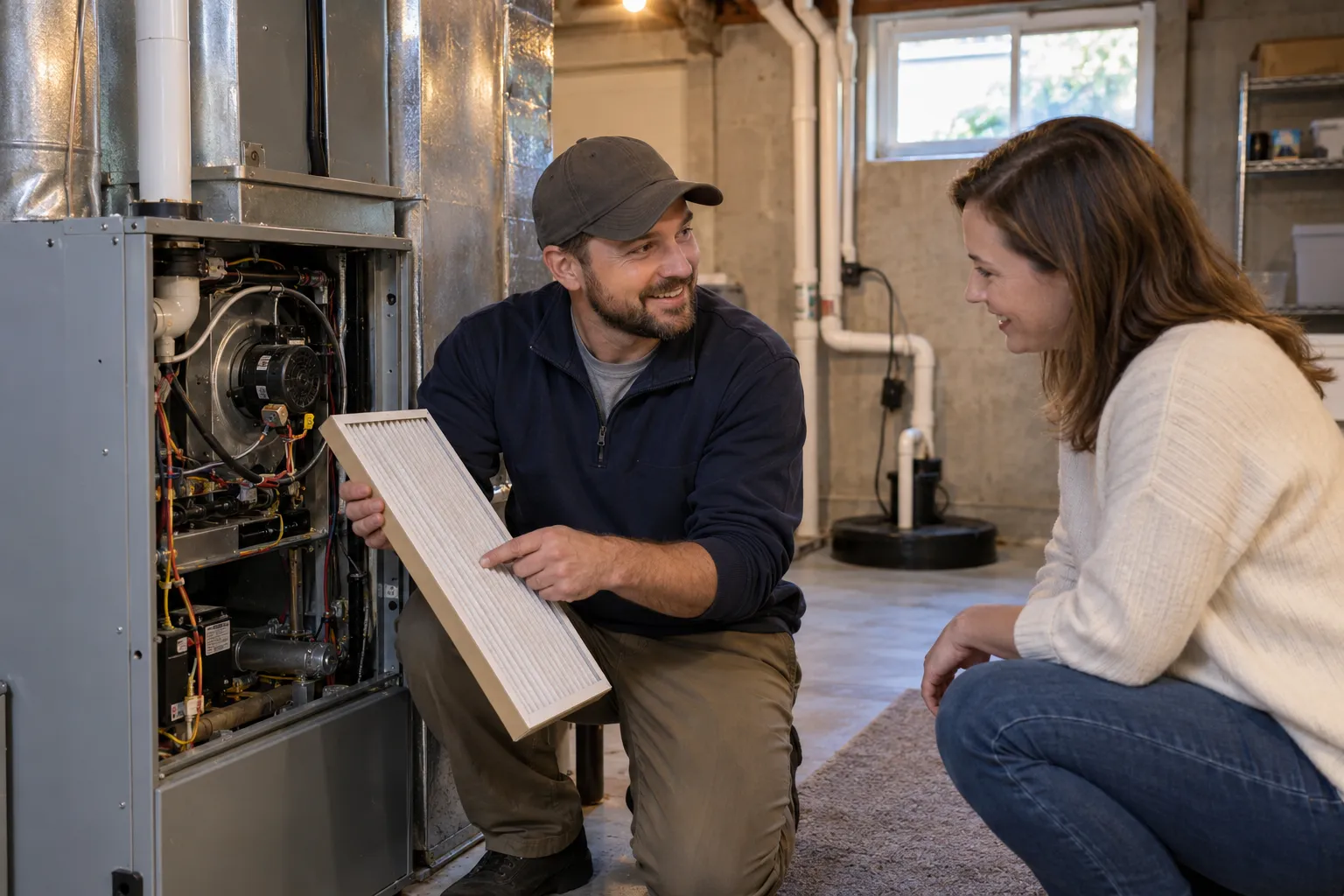
A furnace that stops heating in cold weather is more than a nuisance. It can mean a chilly house, pipes at risk in exposed corners, and stress for everyone at home. Furnace faults range from a clogged filter to a cracked part, so the first job is to learn which one you have.
Governmentsinging Heating & Air is a referral service. We connect you with independent providers in our network who diagnose and repair gas and electric furnaces in bungalows, ranch homes and older frame houses. The provider does the work. You compare estimates, ask questions, and decide with no obligation. Safety comes first, so gas smells and carbon monoxide alarms get their own steps below. After the repair, simple upkeep helps keep the breakdown from returning.
Smell Gas? Leave First
A rotten-egg smell near your furnace is a safety problem, not a repair problem. Handle it before anything else.
Do This
- Walk out of the house right away and take everyone with you, pets included.
- Call your gas utility or emergency number from outside or from a neighbor's home.
- Wait outside until responders say it is safe to return.
Do Not Do This
- Do not flip light switches, use a lighter, or run any appliance.
- Do not try to find the leak yourself.
- Do not go back in to grab something.
Carbon Monoxide Alarm Going Off?
Carbon monoxide has no smell. A cracked heat exchanger or a blocked vent can let it into your home. Headaches, dizziness, nausea and a sleepy feeling are warning signs.
If an alarm sounds, get everyone into fresh air and call emergency services. Do not silence it and go back to bed. Have the furnace checked by a provider before you use it again.
Quick Checks Before You Book
Some problems are simple. Try these only if you have no gas smell and no alarm.
Thermostat and Power
Make sure the thermostat is set to heat and set a few degrees above room temperature. Replace weak batteries. Check that the furnace switch is on and the breaker has not tripped. If a breaker trips again, stop. Do not keep resetting it.
Filter and Vents
A clogged filter can make a furnace shut off from overheating. Swap in a clean one. Open the supply vents and clear anything blocking the return grilles, such as furniture or boxes.
Signs Your Furnace Needs Repair
Do not wait for a total shutdown if you notice these:
- Warm air that turns cool, or rooms that heat unevenly
- Banging, squealing, rattling or grinding sounds
- The furnace turns on and off in short bursts
- Yellow or flickering burner flame instead of steady blue
- Rising heating bills with no change in habits
- A burning smell that lasts longer than the first startup of the season
What Happens During a Repair Visit
A provider usually starts by asking about symptoms. Then they inspect the thermostat, filter, burners, ignition, blower and venting. They test safety controls and explain what they found.
Ask to see or hear the problem described in plain words. You should get a written estimate before any larger repair begins.
Common Furnace Repairs
- Ignitor or flame sensor: the furnace tries to start, then quits.
- Blower motor or capacitor: the burners run, but little warm air moves.
- Control board: random shutdowns or no response at all.
- Inducer motor and pressure switch: the system will not complete a start-up cycle.
- Heat exchanger crack: a serious safety concern that often points toward replacement.
Repair or Replace Your Furnace?
Age, repair cost and safety all matter. A furnace near the end of its life that needs a costly part may be a poor place to spend money. A cracked heat exchanger is a common reason homeowners start searching for furnace replacement near me.
If the unit is newer and the fault is small, repair usually makes sense. Ask the provider to explain both paths and put them in writing.
Compare Before You Commit
Do get more than one estimate when the repair is big. Do compare what each one includes, not just the total. Do not sign anything on the spot because someone says the price will change. You have time to decide.
Questions to Ask the Provider
- What exactly failed, and can you show me?
- Is this repair, or is replacement the wiser choice?
- What parts and labor are in the written estimate?
- Is there a warranty on parts or labor, and what does it cover?
- What should I do to prevent this from happening again?
Fix It, Then Protect It
A repaired furnace still needs care. Cold winters with deep frost make heating and cooling equipment work hard, so small habits pay off.
Change the Filter on Schedule
Check it monthly in heating season. Most need a swap every one to three months.
Book a Tune-Up Before the Frost
A yearly HVAC service visit in early fall can catch worn parts before the first cold snap. Ask the provider to check the burners, venting and safety controls.
Care for the Basement Space
Many furnaces sit in full basements. Keep the area dry and clear, keep storage away from the unit, and make sure the sump pump works during spring flooding. Test your carbon monoxide detectors twice a year.
What's Included
Safety Checks
Providers can inspect burners, venting and safety controls so you know the furnace is running safely.
Clear Diagnosis
A provider finds the cause and explains it in plain words.
Written Estimates
Ask for the repair details and price in writing before work starts.
Upkeep Advice
After the fix, providers can suggest filter timing and tune-ups to help prevent the same failure.
Typical Furnace Repair Costs
These are typical U.S. ranges only. Your price depends on the furnace model, the part, and how hard it is to reach. Always get a written quote before work begins.
| Repair item | Typical range | Notes |
|---|---|---|
| Diagnostic visit | $75 – $200 | Often applied toward the repair |
| Ignitor or flame sensor | $100 – $450 | Common cause of no-heat calls |
| Thermostat replacement | $100 – $500 | Smart models cost more |
| Control board | $300 – $900 | Varies by brand and age |
| Blower motor | $450 – $1,500 | Variable-speed motors cost more |
| Heat exchanger repair | $1,500 – $3,500 | Replacement may be wiser |
How It Works
Check Safety First
Leave the home if you smell gas or an alarm sounds. Otherwise, do the simple checks listed above.
Request an Estimate
Tell us about your furnace and symptoms. Request a callback to check provider availability.
Compare Options
Review written estimates and ask questions at your own pace.
Repair, Then Maintain
The provider does the repair. Then you set up filter changes and a yearly tune-up.
Why Call Governmentsinging Heating & Air
Safety Comes First Here
Gas and carbon monoxide steps are placed up front so you know what to do before anything else.
Compare Calmly
Review more than one estimate and decide with no obligation or pressure.
Independent Providers
Providers in our network do the work, not Governmentsinging Heating & Air.
Built To Last
Advice focuses on keeping the problem from coming back after repair.
Other Services
Need residential furnace repair in Raymore?
Tell us what your heating or cooling system is doing. Send a request and a local provider can follow up with a written quote. No obligation.
No obligationResidential Furnace Repair FAQ
Why is my furnace running but not blowing warm air?
Common causes include a dirty filter, a failed ignitor or flame sensor, a thermostat setting, or a blower problem. Check the filter and thermostat first. If the problem stays, a provider can diagnose the exact cause.
Is it safe to keep using a furnace that smells like burning?
A brief dusty smell at the first start of the season can be normal. A strong or lasting burning smell is not. Turn the furnace off and ask a provider to inspect it.
How do I know if I should repair or replace my furnace?
Consider the furnace's age, the repair cost, how often it breaks down, and any safety issue like a cracked heat exchanger. Ask for written options so you can compare them.
Reach a local provider
Tell us what your heating or cooling system is doing. Send a request and a local provider can follow up with a written quote. No obligation.
No obligation